I chose to comment on this article because as both a fan
and as a singer-songwriter, I have pondered over the idea of creating music
that has meaning.However, I like music
of a variety of subjects by a variety of artists who I feel all have something
different to offer. Although the author celebrates the intrinsic merits of
pastiche (McMillan, 2013), the social
implications of what he observes reflect what I see as an ambivalent attitude
toward mainstream contemporary music that I think erodes any critical
evaluation that leads to true artistic appreciation.
References
McMillan, G. (2013, June 28). Long Live the Monkees! (or, Why
"Honest" Music is Overrated). Retrieved June 28, 2013, from
Time.com:
http://entertainment.time.com/2013/06/28/long-live-the-monkees-or-why-honest-music-is-overrated/
The
dream of many musicians is to land the coveted “deal,” the record deal to be
exact. I remember dreaming as a teenager of “getting signed” to Columbia
records, home of many of my favourite artists at the time. I was impressed by
the calibre of performer and the swanky marketing their artists had. Nowadays, it seems the role of labels is changing in the industry they've essentially created. Upon reading the blogs of colleagues
commenting on the issues surrounding copyright, I see two major ideas that are
central to all of them as fans.They
love music and they want free and equal access to it. Period.When I say free, I don’t mean they are
unwilling to pay, in fact it has been quite the contrary. Although they have downloaded music, Derek, at
Underground Radio, David
at Picture of Interest, and Meg
at Animated Films, all report that they gladly and intentional purchase
music only from their favourite artists, as a show of support.In addition to this, they buy merchandise and
attend live shows.I talk a lot about
the agency of the artist in determining how the music reaches the fans.This is not done with out a synergistic
marketing network that is in place solely for the distribution of music.These include, radio, music television, and
good ol’ fashioned word of mouth.As
long as the can artists get music to the fans, I see that other aspects
of this industry are just as relevant if not more so the artists
themselves.
I often listen to Toronto’s Jazz FM, which has listeners from all
over the world via the Internet, and then there’s satellite radio. Follow
blogger David posted an
interesting suggestion about a music subscription service to appease the
label hounds (I have wondered about this one since during the Napster days.).
Vevo and YouTube have pretty much replaced music television channels, most of
the music channels still have awards telecasts, and documentaries that cover
artists.Yes we can stream MP3s from our
car stereos, but these “old” still provide effective outlets to experience
music from all eras by people who are just as in love with music as we are. My
girl Becky from Psyched About Music commented on my last post singing the praises of
artist centric independent
labels and rightly so! With the web, these labels have the chance to give
artist great exposure at very little cost. Will they need to rely so much on
copyrights? I don't think so. One of my recent discoveries (being
a mommy, I kind of live under a rock, okay a play pen, but it’s okay.) was a
video of a live performance of her song “Breathe Me” by Australian singer Sia in a radio station.
What a perfect example of the artist
being simultaneously local and international in a single performance. Then
here’s American pop “idol” Kelly Clarkson singing a cover of the same song
in concert.Now in the spirit of
sharing, I’m all for artist-to-artist acknowledgement of work, but most music
competitions are and YouTube stars are dedicated to cover songs (and to her credit Sia has song on The Great Gastby soundtrack).My colleagues have caused me
to question, is there really a need to get a handle on something that is always
moving? As it gets more and more
difficult to enforce restrictive laws, there are many ways artists can get their
music out that demand new approaches by the big record labels.
When
I purchase music, I want to support the artist because I enjoy the majority of
that artist’s work.I often cannot
afford to go to many live shows, when I do go it’s often an opportunity to see
the truth of the artist’s talent through musicianship and entertainment.Personally, if the musicality isn’t there,
it’s not entertaining.As much as I
believe in putting on a good show, I think there should be a balance between
lively presentation and simply sounding good.If I share music, it is often an economical choice as well as one of
scarcity.For my particular tastes,
there’s a lot of music that is just hard to come by.So the degree to which I comply with
copyright issues is very much based on immediate circumstance. To
be honest, when it comes to recordings, I don’t listen to that much variety. I
like what I like and I tend not to stray too far from that.I think many musicians are like this, in
that, if you sing or play, you most likely listen to what you can, or would
like to eventually sing or play.Any
venture outside of that sphere is probably related to eventually creating your
own interpretation. I don’t enjoy many types of music. But I appreciate all of
it. (Okay, most of it. I loathe anything with an auto-tuned voice.) My
personal path to becoming a professional singer/songwriter has been one that
has considered and encountered issues with copyright. While I fully respect the
artist who wants to live of her or his craft, I have come to realize that
artists have left their ability to do that up to the wrong entity for too long,
namely, the recording industry.Anyone
with a bit of time to do the research will find out that record labels were
basically lenders who quickly became loan sharks if an artist didn’t break the
platinum sale mark.This reality was
much to the dismay of many artists who rejoiced at “getting signed” only to
find out that they end up with mere pennies once they reimbursed labels for
producing, marketing, promoting and distributing their work.In many cases artists still didn’t even own
the rights to the songs. The advent of the digital era has rendered the current model ineffective
and outdated.Most of all, it suppresses
artists and artistry.This
brings me to this question,why should the
destruction of the music industry be prevented(Condry, 2004)? Ian Condry’s assessment
of peer-to-peer networks illustrates its superior over the recording industry
model:
Peer-to-peer
systems follow the principles of network economics, which hinge not on
supply-side economies of scale, but on demand-side economies of networks
(Shapiro and Varian, 1998). The more participants, the more sharing, and the
more distributed users and content, the more valuable the network is.(Condry, 2004)
Photo from www.indieandunsigned.com
This type
of exchange is much more in line with sharing practices between artists’
communities long before there were plugs in walls.Conceptually, it is exactly what led previous
societies to nurture, and flourish art and culture. These days
of low quality albums, and better quality songs is not cutting it for
consumers. It is often record labels, not artists who strongly influence, and
in some cases dictate which songs are included on an album. Music has become
more about commodities, than art.Condry
makes a great point that the lack of soul these practices produce in the final
works disconnect fans from the music (Condry, 2004). The fact
remains, people are reluctant to pay for music they think sucks. Steinmetz
& Tunnell illustrated a contradiction in their research between the
socialist practices of sharing versus the capitalist characteristic of
consumption inherent in the culture of piracy (2013).I believe it is viewing these complex issues
through these divisive paradigms that prevents a sound solution from emerging. The
coexistence of these elements is not contradictory if viewed holistically.Can something be truly shared if it isn’t
consumed on some level? Otherwise, it is straight giving. Sharing allocates.When we share, we all benefit. I can benefit
without us, but we cannot benefit without me.We consume together. It is no
surprise that the motivations behind file sharing are rooted in social and
economical frameworks (Steinmetz & Tunnell, 2013).Mostly, these debates just highlight the
flaws of our cultural ideologies.The struggles
of the big label record industry only illustrate that being greedy makes you
greedier, until you are rendered useless. Then nature takes over. So how might
record industry deal with what they perceive to be piracy? By going away. Big
labels need to disperse their subsidiaries, and return to more community
supported independent models.Digital
rights management laws create ways to be more rigid. Why bother when it’s
easier and more profitable to adapt (Condry, 2004)? Business is fluid, go with the
flow.
References
Condry, I.
(2004, September). Cultures of Music Piracy: An Ethnographic Comparison of
the US and Japan. International Journal of Cultural Studies , 7 (3), 343-363.
Steinmetz, K. F., & Tunnell, K. D. (2013). Under the
Pixelated Jolly Roger: Study of On-line Pirates . Deviant Behavior,
34 (1), 53-67.
Is it really so hard to say thanks to someone who has given you
something that has added value to your life? It's kindergarten 101
right up there with please. In my last post I talked about Producers taking control over their art works by defining their intentions for the work and being proactive in their careers. Resting on the laurels of one great recording or painting, (or whatever) and never performing or creating live again does not an artist make. I also want to reiterate while we are consumers, only some are producers. To consume is about self, to produce is about each other. So as producers, we have a responsibility to each other. So when when an artist or performer decides to use or perform another artist's work, should the creator of said work get a little love? I think so. When artists don't, it implies a lack of regard for the process of creating, and for the person who undertook that process. And they shouldn't have to be brought to court to do it. I believe this attitude is major detriment to creating an open cultural commons.
With Internet giving us everything at our fingertips, how can we overlook all the great art that came before? There's really no excuse and yet in contemporary time the excuse is it's all been done so it's all fair game. It's okay not to give artists credit because "we create from our soooouls maaaan...." No. We create from each other, honouring the past, living in the present and idealizing the future. Some artists tend to romanticize or minimize the labourous existence it is to create or want to create almost constantly. Artistic inspiration at times feels like treading water while other times it washes over you through waves that you ride until your finished work lands you on a beautiful shore. I think the experience of many artists (mine included) is that it is not
a choice, it's a calling. If you want a choice, be an entertainer. No
matter what job you end up in to pay the bills, there is an insatiable
yearning to create some piece of art, whether literary, visual, musical,
theatrical, or through dance. It's often dramatic, and always visceral. Check the example below, I love how Lady Gaga describes her creative process to Oprah.
So when I watch Kirby Ferguson's Everything is Remix Part One and hear all the music Led Zeppelin used without publicly crediting the original artists I feel angry. Those from whom they gleaned spent hours, days and years living their
art so truthfully that they created work that resonated far beyond time,
races, cultures and across generations. I don't care that they are or became Led Zeppelin. Sure, you used that riff, and made it something else. Say thanks for the riff. In public.
Ferguson's Everything is Remix Part Two asserts that creativity occurs copying, transforming and combining elements of our external experiences.
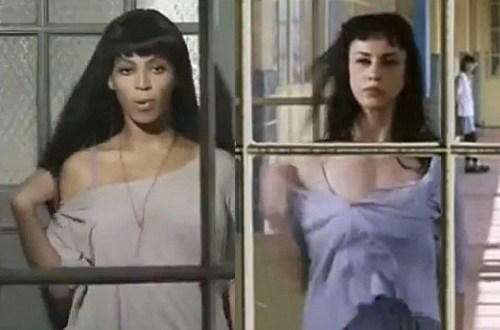
Being creative is a choice, not a state. Reet Roy's observation of the lack of intellectual property protection of dance choreographers make me think of pop singer Beyonce's Countdown video. She copies Anne Teresa De Keersmaeker's works without any transformation. It's not even a remix, it's a copy. Is it a remix if no transformation has occurred is it creative? The creator's name is only acknowledged when she publicly calls out the plagiarism, and subtly, threatens to sue. It couldn't have hurt to say thank you, in public.
"Countdown" & "Rosas Danst Rosas" side by side
The singer said the video was an homage to contemporary art, and talked about contemporary art drawing from different elements. Drawing from, copying, I suppose Ferguson's argument about remixing is most relevant here.
On the other hand, my fellow blogger David's post about YouTube taking down his self-produced fan video of rock singer Meatloaf due to copyright violations, borders on bullying to me.Last time I checked, the television music channels were barely playing music anymore, let alone anything by Meatloaf. What ever happened to no publicity is bad publicity? I know that sounds simplistic, but it makes me think about the reach of this enormous tentacled creature called the "Music Industry" inadvertently stifling the success of artists through these concepts called "piracy" and "copyright." In Sarah's blog (EDM Culture) and Ralph's blog (Underground Music Radio) they speak of drawing creativity from many sources and creating something out of that experience as the true essence and the future of cultural commons. Becky's post at Psyched About Music discusses how digital culture makes it all the more possible.
In her blog, my colleague Meg talked about the importance of educating ourselves on copyright laws. While this is a noble effort, with the sheer breadth of the types of intellectual property, it's hard to even know where to look. Except maybe, if you're already famous, or a working artist who is making a healthful livelihood off his or her work. It's not the practice of copying I find bothersome, it is the lack of gratitude shown from people who are very public, very popular and conveniently forget to mention that they lifted that riff, or dance combination from someone who is working that same art. I believe an irreverent artist can easily become an irrelevant artist. Art so draws upon the connectedness between our external experiences that we cannot risk taking the impact these experiences have for granted. We stand to erode our connectedness.
A problem with those producers in artistic and creative
industries is the lack of effort put forth into defining the intentions of
their work for a distributive and socio-economic context.Tensions don’t lie so much in legislative
policy as much as ideologies of the place art and creativity hold and have held
in society, particularly in the Western World.On one hand, there is the idea of the “bohemian,” antiestablishment”
lifestyle that many in artistic circles subscribe to, on the other is the
desire to live for and off of one’s art works in a capitalist society. The past
50 years or so has experienced huge growth in University programs geared
specifically at arts, design and music training programs.What we now have is surplus of so-called
“creatives” in the job market with nowhere to perform, because of the decline
of traditional arts and culture organizations like theatre and opera
houses.Those in design must rise above
the massive litany of designers to be noticed and hired by active design firms
around the world.Finally, visual
artists remain closest to their original stereotype of being “starved” of
viable opportunities to make a living of their respective discipline without
the right connections.Only recently has
that expanded to include tangential “disciplines” such as new media, arts and
cultural administration and management, as well as an increased interest in
studies in advertising, communications and popular culture.For this reason I am fascinated by the perspective put for by Toby
Miller in his article, “A
View from a Fossil: The New Economy, Creativity and Consumption – Two or Three
Things I Don’t Believe in” (2004).He contrasts the alleged functionalities of the consumer economy with
the overlooked matter of the exploitative labour practices exhibited by its
participants (Miller, 2004 p. 62). Miller makes relevant observations of the
idealistic undertones of media convergence, however I personally, see the
issues of labour exploitation as inherent to bureaucratic power structures. So
while this is certainly connected to the emergence of new creative economies,
the context existed well before new media did. People can very quickly shift from
exploitation to empowered, and new media has provided what is perhaps the most
malleable forum for this process to begin with the greatest impact.
Still, as "producer-consumers" who are new media
literate must protect themselves against misuse by acknowledge the inevitable
structures that arise of the human need for survival and meaning, and find way
adjust their social-economic practices accordingly. Henry Jenkins outlines nine
sites of negotiation between producers and consumers (Jenkins,
2004, p. 38-41,).These sites are
forums through which the consumer addresses power as opposed to exercising it
through consumption. Simultaneously, it is in these spaces that producers must
take a more pragmatic approach in defining the parameters in which their
content is distributed. I will identify the four I argue as most crucial to
creating or maintaining a flourishing cultural commons. First redesigning the
digital economy (Jenkins, 2004 p. 39) means first becoming acquainted with the
place in economy as "producer-consumers".Point seven “Renegotiating relations between
producers and consumers” (Jenkins, 2004, p. 39) directly relates since
producers are also consumers, but consumers aren’t necessarily producers.
Therefore, producers’ restrictions on consumers are effectively
self-restrictions.Part of the economy
of producing is defining the intentions behind distributing content.If this is clearly, and realistically stated,
it becomes easier to spot and counter exploitive practices. Then copyright laws
are actually useful to maintaining the integrity of the culture.
Now, I said this must be stated clearly, and realistically.Meaning suing someone for sharing work might be considered
contradictory to any hope of public exposure.I think as long as credit is given according to the previously outlined parameters,
there should be nothing wrong with sharing content. (For example, the idea of stealing music is
seriously flawed. I think musicians should be paid through live performance and
other production related activities like music licensing and copyrights. If you
put it out, it’s gone. Say goodbye and move on. But I digress.)
Finally, I think Jenkins’ fifth and ninth sites of
negotiation, “Rethinking media aesthetics” and “Re-engaging citizens” address
the central component of keeping culture accessible.We needn’t fear formulas in cultural works if
they facilitate creativity.We must ever
be aware of the distinctions between inspiration, appropriation and
copying.All have their functions within
the creative framework. As number nine suggests the goal is engage citizens.
For better or for worse artistically, “transmedia storytelling” (Jenkins, 2004,
p. 40) relies on formula for perpetuation.The hope is that their release aides in deconstructing the class
frameworks, which lend to the exploitation, that Miller sees.By taking a more proactive approach to their
social-economical function, producer-consumers can absolutely create an
accessible cultural commons. References:
Miller, T. (2004) A view from a fossil. International Journal Of Cultural Studies, 7(1), 55-65.