With Internet giving us everything at our fingertips, how can we overlook all the great art that came before? There's really no excuse and yet in contemporary time the excuse is it's all been done so it's all fair game. It's okay not to give artists credit because "we create from our soooouls maaaan...." No. We create from each other, honouring the past, living in the present and idealizing the future. Some artists tend to romanticize or minimize the labourous existence it is to create or want to create almost constantly. Artistic inspiration at times feels like treading water while other times it washes over you through waves that you ride until your finished work lands you on a beautiful shore. I think the experience of many artists (mine included) is that it is not a choice, it's a calling. If you want a choice, be an entertainer. No matter what job you end up in to pay the bills, there is an insatiable yearning to create some piece of art, whether literary, visual, musical, theatrical, or through dance. It's often dramatic, and always visceral. Check the example below, I love how Lady Gaga describes her creative process to Oprah.
So when I watch Kirby Ferguson's Everything is Remix Part One and hear all the music Led Zeppelin used without publicly crediting the original artists I feel angry. Those from whom they gleaned spent hours, days and years living their art so truthfully that they created work that resonated far beyond time, races, cultures and across generations. I don't care that they are or became Led Zeppelin. Sure, you used that riff, and made it something else. Say thanks for the riff. In public.
Ferguson's Everything is Remix Part Two asserts that creativity occurs copying, transforming and combining elements of our external experiences.
Being creative is a choice, not a state. Reet Roy's observation of the lack of intellectual property protection of dance choreographers make me think of pop singer Beyonce's Countdown video. She copies Anne Teresa De Keersmaeker's works without any transformation. It's not even a remix, it's a copy. Is it a remix if no transformation has occurred is it creative? The creator's name is only acknowledged when she publicly calls out the plagiarism, and subtly, threatens to sue. It couldn't have hurt to say thank you, in public.
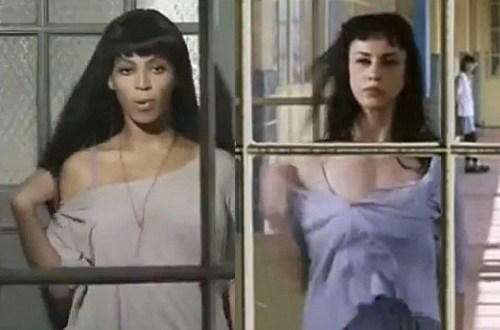 |
| "Countdown" & "Rosas Danst Rosas" side by side |
On the other hand, my fellow blogger David's post about YouTube taking down his self-produced fan video of rock singer Meatloaf due to copyright violations, borders on bullying to me. Last time I checked, the television music channels were barely playing music anymore, let alone anything by Meatloaf. What ever happened to no publicity is bad publicity? I know that sounds simplistic, but it makes me think about the reach of this enormous tentacled creature called the "Music Industry" inadvertently stifling the success of artists through these concepts called "piracy" and "copyright." In Sarah's blog (EDM Culture) and Ralph's blog (Underground Music Radio) they speak of drawing creativity from many sources and creating something out of that experience as the true essence and the future of cultural commons. Becky's post at Psyched About Music discusses how digital culture makes it all the more possible.
In her blog, my colleague Meg talked about the importance of educating ourselves on copyright laws. While this is a noble effort, with the sheer breadth of the types of intellectual property, it's hard to even know where to look. Except maybe, if you're already famous, or a working artist who is making a healthful livelihood off his or her work. It's not the practice of copying I find bothersome, it is the lack of gratitude shown from people who are very public, very popular and conveniently forget to mention that they lifted that riff, or dance combination from someone who is working that same art. I believe an irreverent artist can easily become an irrelevant artist. Art so draws upon the connectedness between our external experiences that we cannot risk taking the impact these experiences have for granted. We stand to erode our connectedness.

No comments:
Post a Comment